The peacock in a dream is a potent symbol in Sanatan Dharma, primarily signifying the presence and blessings of Lord Kartikeya (Skanda, Murugan), the divine commander of the Devas. It represents spiritual awakening, victory over ego, protection from negativity, and the blossoming of inner wisdom, guiding the dreamer towards higher consciousness and auspicious beginnings.
| Attribute | Details |
|---|---|
| Deity Associated | Lord Kartikeya (Skanda, Murugan, Subrahmanya, Shanmukha) |
| Vahana (Divine Vehicle) | Paravani (Peacock) |
| Key Symbolism | Spiritual awakening, wisdom, victory over ego, protection, beauty, vigilance |
| Primary Scripture Reference | Skanda Purana, Mahabharata, Tirumurugatrupadai |
| Associated Chakra | Ajna Chakra (Third Eye) – symbolizing wisdom and insight |
The Peacock’s Call: A Divine Message in Sanatan Dharma
In the profound tapestry of Sanatan Dharma, dreams are not mere random neural firings but often conduits for divine communication, psychological insights, or karmic reflections. The appearance of specific animals, particularly those associated with Devas, carries immense spiritual weight. Among these, the peacock holds a preeminent position, universally recognized as the magnificent Vahana of Lord Kartikeya, also known as Skanda, Murugan, or Subrahmanya. To behold this resplendent bird in a dream is to receive a significant message, often imbued with grace, guidance, and a call towards higher consciousness.
The peacock, with its vibrant plumage, keen eyesight, and ability to conquer serpents, embodies numerous virtues that align perfectly with Kartikeya’s divine attributes. It symbolizes unparalleled beauty, vigilance, immortality, and the destruction of negative forces (represented by snakes). Therefore, dreaming of a peacock is rarely inconsequential; it is a sacred prompt for introspection and spiritual realignment, a sign that Lord Kartikeya’s protective gaze is upon you, urging you to conquer internal and external adversaries.
Puranic History & Legend: Kartikeya and His Resplendent Vahana
The origin story of Kartikeya and his divine mount, the peacock, is beautifully narrated across various Puranas, most notably the Skanda Purana and chapters within the Mahabharata. Lord Kartikeya, born from the fiery essence of Lord Shiva to vanquish the formidable Asura Tarakasura, is the embodiment of divine valor, wisdom, and leadership. His primary mission was to protect the Devas and re-establish Dharma.
The most compelling legend tells of the powerful Asura Surapadman, who had tormented the cosmos with his immense strength and boons. Kartikeya, as the divine general, led the celestial armies against him. During their epic battle, Surapadman, employing his magical powers, transformed himself into a massive mango tree. Lord Kartikeya, in his ultimate act of compassion mixed with divine strategy, split the tree with his divine spear (Vel). Out of the two halves, one transformed into a magnificent rooster, and the other into a splendid peacock.
Instead of destroying them, Kartikeya, in his infinite mercy, accepted both as his eternal symbols. The rooster became his battle standard, symbolizing victory and the dawn of knowledge, while the peacock, named Paravani, became his permanent Vahana. This act signifies Kartikeya’s ability to transform even the most formidable enemy into an instrument of divine service. Thus, the peacock represents the subjugation of ego, the triumph of good over evil, and the transformation of base instincts into spiritual grace. When you witness a peacock in your dream, it is a reminder of this divine victory and the potential for your own spiritual transformation, as elaborated further on Hindutva.online.
Iconographic & Symbolic Marvels: The Peacock in Temple Art
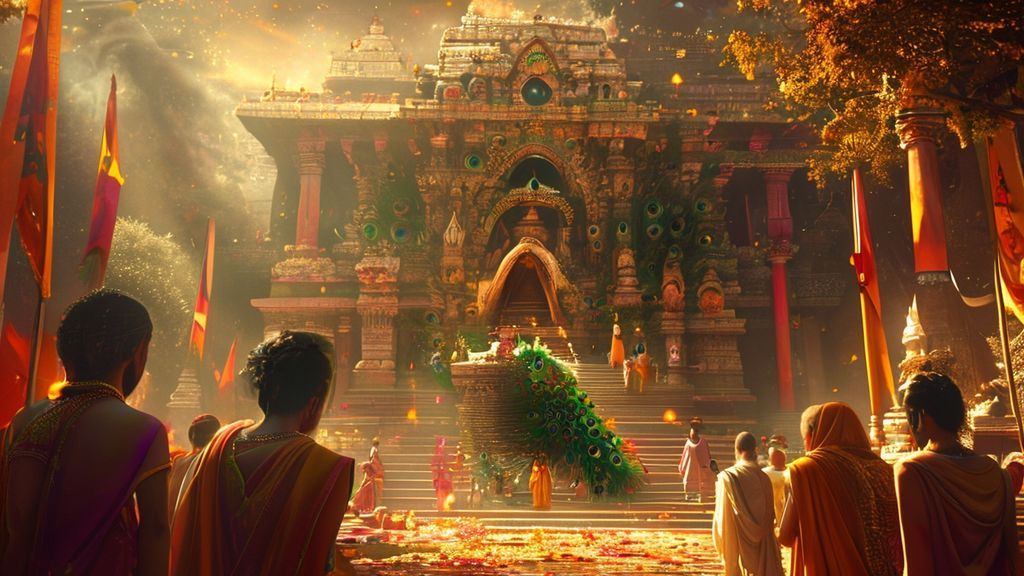
While this topic focuses on dreams, understanding the **architectural and artistic integration** of the peacock in Sanatan Dharma provides deeper context. The peacock is not merely a mount; it is a significant motif in temple iconography, particularly in shrines dedicated to Lord Murugan (Kartikeya) across India, especially in the Dravidian heartland. In temples like Palani, Tiruchendur, or Swamimalai, the peacock is prominently depicted, often guarding the sanctum or gracing pillars and vimanas.
From a “scientific” or observational perspective within Hindu thought, the peacock’s attributes are carefully chosen:
- Beauty and Transcendence: Its iridescent plumage, ever-changing with light, symbolizes the illusory yet beautiful nature of Maya and the underlying divine splendor.
- Vigilance and Awareness: Peacocks are naturally alert creatures with sharp eyesight, symbolizing the spiritual aspirant’s need for constant awareness and discrimination (Viveka) on the path to self-realization.
- Destruction of Poison: Traditionally, peacocks are known to consume snakes without harm, symbolizing Kartikeya’s power to neutralize poisons, both literal and metaphorical (such as ego, anger, and delusion) within the devotee.
- Cosmic Dance: When a peacock spreads its feathers, it forms a mesmerizing circle, often interpreted as a microcosm of the cosmos, reflecting the divine dance of creation and dissolution.
These symbolic integrations elevate the peacock from a mere bird to a sacred emblem, deeply embedded in the spiritual consciousness of Hindus, making its appearance in a dream a powerful sign of divine intervention and grace.
Rituals & Puja Vidhi Upon Seeing the Peacock in a Dream
If you have been blessed with the vision of a peacock in your dream, it is considered auspicious and a signal to engage more deeply with spiritual practices. While there isn’t a single prescriptive ritual for “peacock dreams,” these steps can help honor the divine message:
- Introspection and Gratitude: Upon waking, spend a few moments in quiet reflection. Consider any challenges you are facing or decisions you need to make. Offer gratitude to Lord Kartikeya for his guidance and blessings.
- Sankalpa (Intention): Formulate a clear intention for self-improvement, victory over personal shortcomings (like ego or procrastination), or seeking wisdom in a particular area of your life.
- Simple Puja to Lord Kartikeya:
- Cleanse yourself and your puja space.
- Light a Deepam (oil lamp) and incense (Dhoop).
- Offer a flower, preferably a red flower or jasmine, to a picture or idol of Lord Kartikeya.
- Offer fruits or sweets (Naivedyam).
- Meditate on the image of Lord Kartikeya seated upon his peacock Vahana.
- Japa (Chanting): Regularly chant Kartikeya Mantras (see below) to invoke his energy and blessings.
- Charity and Service: Perform an act of selfless service (Seva) or offer charity, especially to children, as Kartikeya is eternally youthful.
Mantras & Chants for Lord Kartikeya
Chanting these sacred mantras can strengthen your connection with Lord Kartikeya and invite his blessings, particularly after a divine dream signal:
Moola Mantra:
ॐ सरवणभवाय नमः
Om Saravanabhavaya Namah
(Meaning: Salutations to the one born in the thicket of reeds, referring to Kartikeya’s birth.)
Kartikeya Gayatri Mantra:
ॐ तत्पुरुषाय विद्महे महासेनाय धीमहि तन्नो स्कन्दः प्रचोदयात्॥
Om Tatpurushaya Vidmahe Mahasenaya Dhimahi Tanno Skandah Prachodayat॥
(Meaning: Om, Let us meditate on the Great Purusha, the great Commander. May Lord Skanda illuminate our intellect.)
Shatru Samhara Mantra:
ॐ श्रीं ह्रीं क्लीं श्रीं नमः श्री सुब्रह्मण्याय
Om Shreem Hreem Kleem Shreem Namah Shri Subrahmanyaya
(A powerful mantra for the destruction of inner and outer enemies, seeking protection and victory.)
Dos and Don’ts for Interpreting the Peacock Dream
- DO reflect on your current spiritual path and any challenges you face. The peacock often signifies a call to conquer inner demons or ego.
- DO express gratitude and offer a simple puja or meditation to Lord Kartikeya.
- DO interpret the dream as a sign of divine protection and guidance, encouraging you to move forward with courage.
- DO strive for purity in thought, word, and deed, as Kartikeya represents divine innocence and power.
- DON’T dismiss the dream as mere fantasy. In Sanatan Dharma, such vivid symbolic dreams are often considered significant.
- DON’T become arrogant or egoistic even if you interpret the dream as a sign of impending success. Remember the peacock’s origin from Surapadman’s transformation.
- DON’T engage in negative thoughts or actions, as this would contradict the pure and victorious energy of Kartikeya.
- DON’T expect immediate, material results. The blessings are primarily spiritual, leading to inner strength and wisdom.
What is the significance of Kartikeya’s peacock?
Kartikeya’s peacock, Paravani, symbolizes the transformation of ego (Surapadman) into a divine vehicle. It represents victory over ignorance, protection from negative forces, keen spiritual insight, and the profound beauty that accompanies awakened wisdom. Its ability to consume serpents further underscores its symbolism of conquering base instincts and poison (negative influences).
Does a peacock dream always mean Kartikeya?
While the peacock is most strongly associated with Lord Kartikeya, its presence in a dream broadly signifies auspiciousness, beauty, vigilance, and spiritual awakening in Sanatan Dharma. However, its direct connection to Kartikeya is primary, especially when the dream feels particularly vivid, protective, or imparts a sense of divine leadership and wisdom. It’s always beneficial to consider Kartikeya’s attributes.
How can I honor Kartikeya after such a dream?
You can honor Lord Kartikeya by performing a simple puja, chanting his mantras like “Om Saravanabhavaya Namah,” visiting a Kartikeya temple, offering red flowers or fruits, and meditating on his divine form. Most importantly, strive to embody his virtues of courage, wisdom, vigilance, and the subjugation of ego in your daily life. Regular self-reflection and adherence to Dharmic principles are also ways to honor him.
Is there a specific day to worship Kartikeya?
Tuesdays are traditionally auspicious for worshipping Lord Kartikeya, as are the Kritika nakshatra days. The Shashti Tithi (sixth day after the new moon or full moon) is also highly sacred, particularly Skanda Shashti, which commemorates his victory over Surapadman. Engaging in devotion on these days can amplify the spiritual benefits of a peacock dream.
Dharmic Significance: Embracing the Divine Language of Dreams
The appearance of a **peacock in a dream** is far more than a fleeting nocturnal vision; it is a profound testament to the intricate, symbolic language of Sanatan Dharma. It reinforces the belief that the divine actively communicates with sincere seekers, guiding them through life’s labyrinth. Such dreams serve as powerful reminders of Lord Kartikeya’s eternal vigilance, his role as the protector of Dharma, and his boundless capacity to bestow wisdom and courage.
By understanding and revering these sacred symbols, devotees not only deepen their personal spiritual journey but also actively participate in preserving the rich cultural and religious heritage that defines Hinduism. It encourages a life of introspection, devotion, and alignment with Dharmic values, ensuring that the eternal wisdom of the Rishis continues to inspire generations. Exploring such deep meanings is a core mission of Hindutva.online, aiming to illuminate the paths for every seeker.