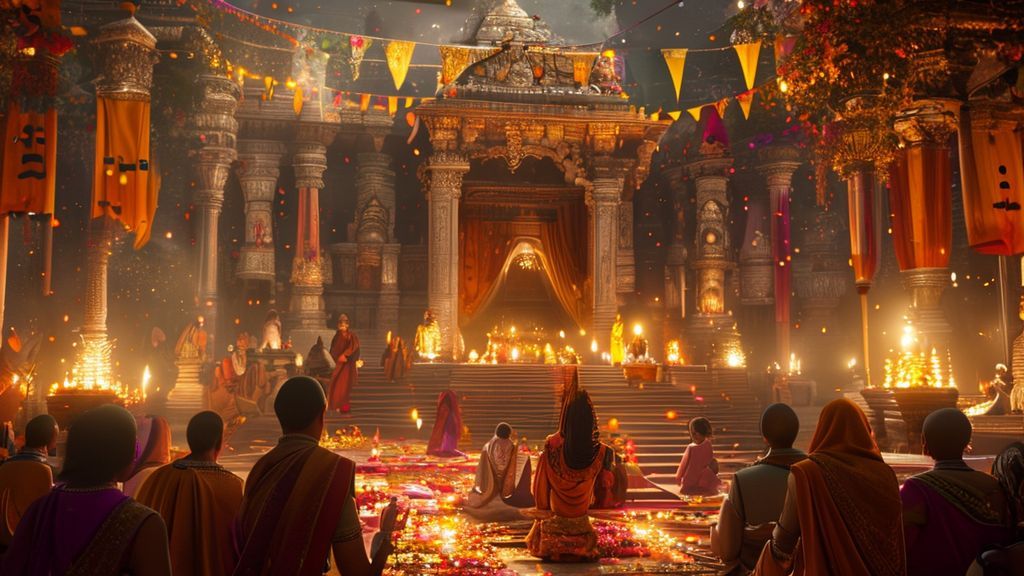
The Sangeet ceremony, an integral and joyous pre-wedding ritual in Hindu traditions, is a vibrant celebration where families unite through music, dance, and collective merriment, offering heartfelt blessings to the couple. This auspicious evening, fostering deep familial bonds and spiritual harmony, serves as a beautiful prelude to the sacred Vivaha Samskara, enriching the spiritual and emotional foundation of the upcoming union.
| Attribute | Details |
|---|---|
| Event Type | Pre-wedding celebratory ritual |
| Significance | Symbolizes joy, unity, and blessings for the marital journey |
| Key Elements | Music, traditional songs (Mangal Gaan), folk dances, skits, communal feasting |
| Traditional Origin | Primarily a North Indian tradition, now adopted widely across India and diaspora |
| Scriptural Context | Part of the broader Vivaha Samskara tradition, emphasizing auspiciousness, harmony, and joy as outlined in Grihya Sutras and Rigvedic hymns (e.g., X.85) relating to marriage. |
The Symphony of Sanatan Dharma: Understanding the Sangeet Ceremony
In the vast tapestry of Sanatan Dharma, where every ritual is a profound journey into the sacred, the Vivaha Samskara, the sacrament of marriage, stands as a cornerstone of societal and spiritual life. The Sangeet ceremony, while often perceived as a mere social gathering, is in fact a deeply embedded expression of this spiritual joy, a vibrant pre-wedding ritual that orchestrates harmony, familial bonding, and collective blessings for the embarking couple. It is a testament to the belief that marriage is not merely a union of two individuals but a sacred confluence of two families, two lineages, coming together in a divine celebration. Through melodious songs and spirited dances, the Sangeet invokes a celestial ambiance, preparing the hearts and minds for the profound spiritual commitment that lies ahead.
The very essence of the Sangeet lies in the concept of Nada Brahma, where sound is revered as a manifestation of the Divine. The hymns, the devotional songs, and the joyous melodies sung during this event are not just entertainment; they are a form of collective prayer, imbued with spiritual energy, invoking prosperity, longevity, and profound love for the couple. It is a conscious effort to build an atmosphere of auspiciousness, clearing any obstacles and filling the familial space with positive vibrations (shubha-shakti).
Puranic Echoes and Traditional Roots of Celebration
While the term “Sangeet ceremony” as a distinct pre-wedding event may not be explicitly detailed in the most ancient Vedic texts or primary Puranas, the spirit of communal celebration, auspicious music (Mangal Gaan), and dance as integral components of weddings and festive occasions is deeply rooted in our Itihasa. The Rigveda itself, in hymns pertaining to marriage (e.g., Rigveda X.85), speaks of joy, prosperity, and blessings invoked through sacred verses and communal participation.
Narratives within the great Epics, such as the Ramayana and Mahabharata, offer glimpses into the grand festivities surrounding royal weddings. The marriage of Lord Rama and Sita, as described in the Valmiki Ramayana, details elaborate preparations, songs, and joyful gatherings that captivated entire kingdoms. Similarly, the Mahabharata recounts the jubilant atmosphere during weddings of the Pandavas and Yadavas, where music, dance, and poetic recitations were paramount in expressing collective happiness and bestowing blessings. These accounts underscore a long-standing tradition of musical celebrations as a vital part of the Vivaha Samskara. The Sangeet, in its contemporary form, is an evolution of these ancient customs, a continuation of the tradition of Vivaha Geeta (wedding songs) passed down through generations, ensuring that the union is inaugurated amidst the purest form of joy and divine grace. It is a cultural manifestation designed to harmonize the energies of both families, transforming potential anxieties into shared happiness and anticipation.
The Symbolic & Cultural Architecture of Sangeet
While not a physical structure, the Sangeet ceremony constructs a profound social and spiritual architecture. It meticulously builds bridges between families, often introducing relatives from distant branches through performance and shared laughter. This “architecture” is designed for emotional integration and bonding. The structured performances, often showcasing members from both sides, symbolize the coming together of two distinct family traditions into a unified whole. It creates a space where cultural expressions, often unique to regional or familial heritage, are celebrated and shared, ensuring that the new couple carries forward not just individual legacies but a rich combined heritage.
From a “scientific” perspective (Adhyatmic Vijnana), the Sangeet acts as a psychological and spiritual preparation. The collective positive energy generated through song, dance, and laughter is believed to mitigate negative influences (drishti dosha) and fill the environment with auspicious vibrations (mangalik spandan). This energetic cleansing and amplification are crucial before the main wedding rituals, ensuring a pure and conducive atmosphere for the sacred fire and mantras.
Rituals of Joy: The Sangeet Puja Vidhi
While not a traditional Vedic puja with specific deity invocations through fire, the Sangeet holds its own unique ritualistic sequence, a “vidhi” of joyous expression. Each element serves to foster spiritual connection and familial harmony.
- Ganesha Vandana / Saraswati Vandana: Often, the event begins with a prayer to Lord Ganesha for obstacle removal (Vighnaharta) and Goddess Saraswati, the patron of arts and knowledge, to bless the performances and ensure a harmonious evening.
- Family Introductions through Song: Members from the bride’s and groom’s sides perform songs and dances, often introducing family members playfully. This helps in breaking the ice and fostering familiarity.
- Blessing Songs (Mangal Gaan): Elders or women of the family sing traditional folk songs, often accompanied by instruments like the Dholak, harmonium, or tabla. These Vivaha Mangal Gaan invoke blessings for the couple’s future, prosperity, and a harmonious married life.
- Devotional Singing (Bhajan/Kirtan): Many families include a session of devotional songs, dedicating the festivities to their Ishta Devata and seeking divine grace for the couple.
- Thematic Performances & Skits: Often, choreographed dances and humorous skits are performed, narrating the couple’s love story, depicting family values, or simply providing entertainment.
- Communal Dance & Feast: The evening culminates in a communal dance floor where everyone participates, followed by a celebratory feast, symbolizing shared happiness and abundance.
Each act, whether a humorous skit or a soulful bhajan, contributes to the sacred preparation for the Vivaha Samskara, making it a truly unique “puja” of the heart.
Mantras & Chants for Marital Bliss
Though Sangeet is primarily cultural, integrating sacred chants can deepen its spiritual resonance. Devotees can offer mental or whispered prayers during the ceremony.
For general auspiciousness and blessing the union:
ॐ मंगलम् भगवान् विष्णुः, मंगलम् गरुड़ध्वजः।
मंगलम् पुण्डरीकाक्षः, मंगलाय तनो हरिः॥
Om Mangalam Bhagavan Vishnu, Mangalam Garudadhwajah.
Mangalam Pundarikakshah, Mangalaya Tano Harih.
(Auspicious is Lord Vishnu, auspicious is one with the Garuda emblem. Auspicious is the lotus-eyed one, Hari brings forth all auspiciousness.)
For harmony and mutual affection (from Rigveda X.85, part of the Vivaha Suktam):
सं गच्छध्वं सं वदध्वं सं वो मनांसि जानताम्।
देवा भागं यथा पूर्वे संजानाना उपासते॥
Sam gacchadhvam sam vadadhvam sam vo manāṁsi jānatām.
Devā bhāgaṁ yathā pūrve saṁjānānā upāsate.
(Come together, speak in harmony; may your minds be in accord, as the ancient devas partook of their share with common mind.)
Chanting these, or simple affirmations like “May this union be blessed with eternal love and prosperity,” elevates the Sangeet from a mere social event to a profound spiritual offering.
Dos and Don’ts for the Sangeet Ceremony
To honor the sanctity and joy of the Sangeet, certain etiquettes are traditionally observed:
- Do: Dress modestly and appropriately for a festive, family-oriented event.
- Do: Participate enthusiastically in the singing and dancing, even if only clapping along.
- Do: Offer genuine blessings and good wishes to the couple and their families.
- Do: Engage respectfully with all family members, especially elders.
- Do: Savor the traditional food and hospitality offered by the hosts.
- Don’t: Overshadow the couple or monopolize the performances.
- Don’t: Consume excessive alcohol or engage in behavior that might disrupt the family-friendly atmosphere.
- Don’t: Be late, as the initial rituals and blessings are significant.
- Don’t: Criticize or disparage anyone’s performance or cultural traditions.
- Don’t: Leave without extending your gratitude to the hosts.
Frequently Asked Questions About Sangeet
Is the Sangeet Ceremony a Vedic Ritual?
While the Sangeet ceremony itself is not directly prescribed as a specific Vedic ritual in ancient scriptures, its underlying principles are deeply aligned with Vedic philosophy. It embodies the spirit of Ananda (bliss), Sauharda (harmony), and collective blessing, which are integral to the Vivaha Samskara. It is a cultural manifestation that supports the spiritual goals of marriage, ensuring an auspicious and joyful beginning as per Dharmic tenets. For more insights into traditional Hindu rituals, visit Hindutva.online.
What is the Significance of Music and Dance in Sangeet?
Music and dance in Sangeet serve multiple profound purposes. They are expressions of pure joy and celebration, bringing families together. From a spiritual perspective, music, as Nada Yoga, is believed to purify the environment and elevate consciousness, invoking divine blessings. Dance symbolizes the exuberance of life, the harmony of movement, and the breaking of inhibitions, fostering unity and creating lasting memories. It is a powerful medium for expressing love, hope, and the collective desire for the couple’s happiness.
Can Sangeet be Performed for Any Hindu Wedding?
While traditionally more prevalent in North Indian weddings, the Sangeet ceremony has transcended regional boundaries and is now widely adopted across various Hindu communities in India and globally. Its universal appeal lies in its celebratory nature, its ability to unite families, and its emphasis on joy and blessings. Adaptations are common, with families incorporating elements from their own cultural heritage, making it a truly inclusive and adaptable tradition.
Preserving Sanatan Dharma Through Collective Joy
The Sangeet ceremony, far from being a mere social function, is a vibrant thread in the fabric of Sanatan Dharma. It reinforces the importance of family (Kutumbha), community (Samāja), and shared celebration in the journey of life. By fostering an environment of love, laughter, and collective prayer, it imbues the upcoming Vivaha Samskara with immense spiritual power and auspiciousness. It teaches the younger generation the beauty of our traditions, the richness of our music, and the strength derived from familial bonds. In an increasingly globalized world, such ceremonies serve as vital anchors, connecting us to our roots and ensuring that the timeless values of Dharma are not only preserved but joyfully celebrated and passed on. The Sangeet is a luminous reminder that the path of Dharma is one of harmonious existence, celebrated in every phase of life, a testament to the eternal wisdom we find at Hindutva.online.