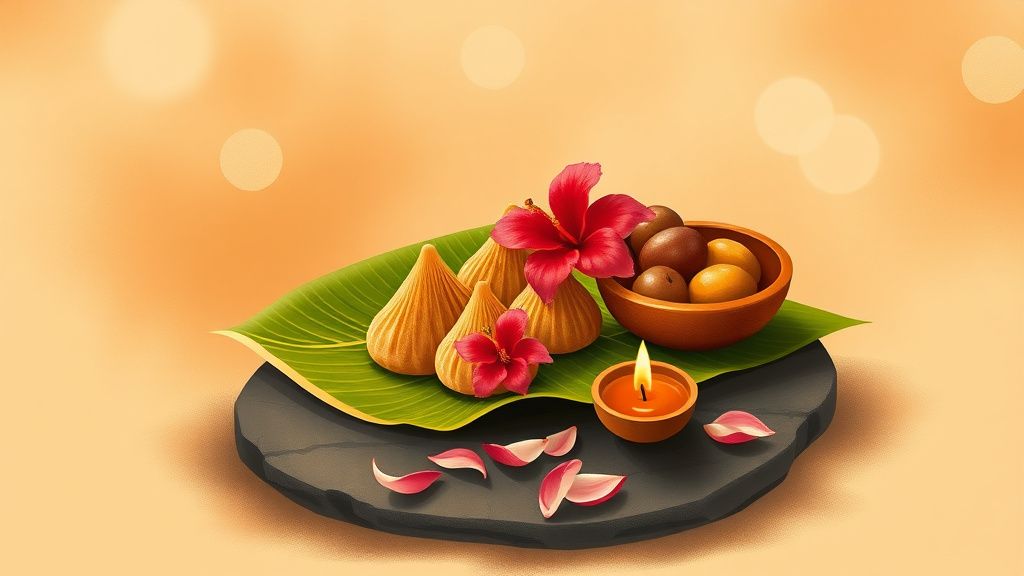
Sankashti Chaturthi is the Ganesha vrat day observed on every Krishna Chaturthi, the fourth tithi after Purnima in each lunar month. 2026 carries 13 Sankashti Chaturthis, including three Angaraki Sankashtis (Tuesday-falling) on 6 January, 5 May and 29 September. The fast runs from sunrise to moonrise, with each month dedicated to a different form of Ganesha (Lambodara, Dwijapriya, Bhalachandra and so on). Below is the full 2026 calendar with moonrise times for Delhi, the monthly Ganesha names, and the vidhi of the vrat.
The 2026 Sankashti Chaturthi calendar
- 6 January (Tue): Lambodara Sankashti. Moonrise 8:59 PM. Angaraki.
- 5 February (Thu): Dwijapriya Sankashti. Moonrise 9:39 PM.
- 6 March (Fri): Bhalachandra Sankashti. Moonrise 9:18 PM.
- 5 April (Sun): Vikata Sankashti. Moonrise 9:58 PM.
- 5 May (Tue): Ekadanta Sankashti. Moonrise 10:35 PM. Angaraki.
- 3 June (Wed): Vibhuvana Sankashti. Moonrise 10:04 PM.
- 3 July (Fri): Krishnapingala Sankashti. Moonrise 9:53 PM.
- 2 August (Sun): Gajanana Sankashti. Moonrise 9:24 PM.
- 31 August (Mon): Heramba Sankashti. Moonrise 8:29 PM.
- 29 September (Tue): Vighnaraja Sankashti. Moonrise 7:44 PM. Angaraki.
- 29 October (Thu): Vakratunda Sankashti. Moonrise 8:17 PM.
- 27 November (Fri): Ganadhipa Sankashti. Moonrise 8:18 PM.
- 26 December (Sat): Akhuratha Sankashti. Moonrise 8:19 PM.
Moonrise times above are for Delhi. Mumbai delays by ~25 minutes, Kolkata advances by ~35 minutes, Chennai is close to Delhi within 10 minutes. Use the panchang’s city dropdown for your local time.
What Sankashti Chaturthi marks
Sankashti translates as “deliverance from difficulty.” The vrat is observed as an appeal to Ganesha for the removal of obstacles in any specific concern (an illness, an exam, a court case, a delayed marriage). The classical references are in the Ganesha Purana and the Skanda Purana, where the vrat is associated with the recovery of King Surasena from a curse, and with the protection of devotees in difficulty.
Each month is assigned to one of the twelve principal forms of Ganesha (with a thirteenth in Adhik Maas years like 2026). The names come from the Sankashti Ganesha Stotra, a Sanskrit hymn naming twelve forms, each with its own iconography and presiding direction.
Angaraki Sankashti: the highest peak
When Sankashti Chaturthi falls on Tuesday, it is called Angaraki Sankashti, treated as the most meritorious form of the vrat. Tuesday’s planetary lord is Mangal (Mars), called Angaraka in classical Jyotisha; the day’s overlap with Sankashti is read as a doubled potency. 2026 has three Angaraki Sankashtis: 6 January, 5 May, and 29 September.
Major Ganesha temples (Siddhivinayak Mumbai, Dagdusheth Halwai Pune, Ranjangaon, Moreshwar, and the other Ashtavinayak shrines) draw their highest weekday-Sankashti crowds on Angaraki. Trust portals at Siddhivinayak open Angaraki-specific darshan booking 7 to 14 days ahead.
The vrat: how the day runs
- Sunrise: bath, sankalpa with the day’s specific Ganesha name (e.g. “Lambodara Sankashti vrat on 6 January 2026”).
- Daytime: phalahara fast (fruits, milk, kuttu, singhada). The strict observe nirjala.
- Evening puja: at the home shrine, with the kalash, durva grass, modak (or boondi laddoo), and red flowers. The Sankashti Ganesha Stotra and Ganapati Atharvashirsha are recited.
- Moonrise: arghya offered to the moon with water from a copper vessel; the day’s Ganesha form invoked again.
- Parana (fast break): after the moonrise arghya. The first food is panchamrita, then a light grain-and-pulse meal.
The twelve forms of Ganesha and the months
- Lambodara (Magha): “the pot-bellied one.” Form of compassion.
- Dwijapriya (Phalguna): “beloved of the twice-born.” Form of learning.
- Bhalachandra (Chaitra): “the moon-on-his-brow.” Form of grace.
- Vikata (Vaishakha): “the imposing one.” Form of strength.
- Ekadanta (Jyeshtha): “the single-tusked.” The form associated with the writing of the Mahabharata.
- Krishnapingala (Ashadha): “the dark-tawny one.” Form of victory.
- Gajanana (Shravana): “the elephant-faced.” The basic iconography.
- Heramba (Bhadrapada, second): “the protector of the weak.” Five-headed form, rides a lion.
- Vighnaraja (Ashwin): “king of obstacles.” The form ruling all impediments.
- Vakratunda (Kartika): “the curved-trunked.” The principal removed-obstacle form.
- Ganadhipa (Margashirsha): “lord of the ganas.” The retinue form.
- Akhuratha (Pausha): “the mouse-chariot.” Riding-the-mouse form.
- Vibhuvana (Adhik Maas): “lord of all realms.” The intercalary form.
The Sankashti Ganesha Stotra invokes all twelve in sequence; some households recite the full stotra each Sankashti, others recite only the verse for that month’s form. For what it’s worth, the simpler practice (one verse, the month’s form) is the more sustainable monthly observance and is the form most family priests recommend for starting a vrat.
Common questions
Is Sankashti the same as Vinayaka Chaturthi?
No. Vinayaka Chaturthi is the Shukla Chaturthi (bright fortnight); Sankashti Chaturthi is the Krishna Chaturthi (dark fortnight). Both are dedicated to Ganesha but observed on opposite tithis. The annual Ganesh Chaturthi festival (Bhadrapada Shukla Chaturthi) is the largest Vinayaka Chaturthi of the year.
What if the moonrise time and Chaturthi tithi do not align?
Sankashti is observed on the day on which moonrise occurs while Chaturthi tithi prevails. Occasionally Chaturthi ends before moonrise; in such cases the vrat is performed on the preceding day. The dates above already reflect this adjustment from published panchangs.
Can the vrat be observed without moon sighting?
In cloud or rain, the calculated moonrise from the panchang is treated as the moment for arghya, even if the moon is not visible. Some traditions wait for actual sighting; the published muhurat is the conservative form.
One limitation worth noting
The thirteenth (Adhik Maas) Sankashti in 2026 falls on 31 August (Heramba), but some panchangs list it differently depending on how they treat the intercalary fortnight. The list above follows the Drik Panchang reading. For a sampradaya-aligned schedule, use the family priest’s calendar.
For background see Wikipedia on Sankashti Chaturthi and the Drik Panchang 2026 Sankashti Chaturthi calendar.
