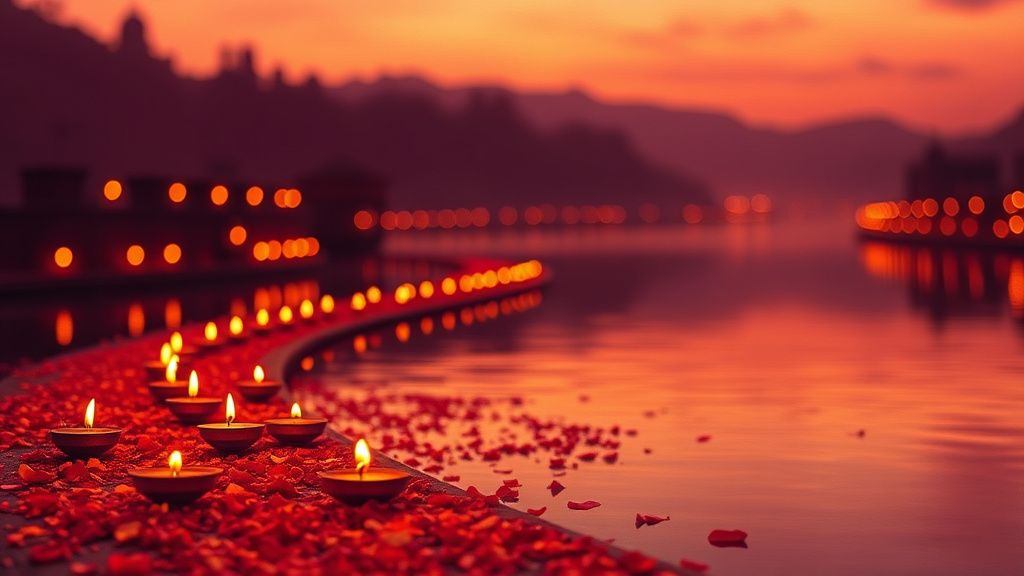
The Prayagraj Kumbh Mela is held at the Triveni Sangam, the confluence of the Ganga, Yamuna and the mythical Saraswati at Prayagraj (the city formerly named Allahabad). The 2025 Maha Kumbh (13 January to 26 February 2025) drew an estimated 66 crore pilgrims, the largest peacetime human gathering ever recorded. The Ardh Kumbh follows in 2031; the next full Maha Kumbh is in 2037. The annual Magh Mela continues every January-February in between. Below is the significance of the Triveni Sangam, the cycle of Prayagraj melas (annual, Kumbh, Ardh Kumbh, Maha Kumbh), and what the 2025 mela’s scale revealed about the future of large-scale pilgrim gatherings.
The Prayagraj cycle
- Annual Magh Mela: every January-February. The smallest of the Prayagraj melas, with shahi snans on Makar Sankranti, Paush Purnima, Mauni Amavasya, Basant Panchami, Maghi Purnima and Maha Shivaratri.
- Kumbh Mela: every 12 years. The major event, last held in 2013, with the most recent counted as Kumbh.
- Ardh Kumbh: at the six-year midpoint of the Kumbh cycle. Last held in 2019.
- Maha Kumbh: every 144 years, falling on the 12th Kumbh cycle. The 2025 Maha Kumbh was the most recent; the next is in 2169 by classical reckoning, though some sources reckon differently and place a Maha Kumbh in 2037 (the next full Kumbh after the 2025 Maha Kumbh year).
- Next Ardh Kumbh: 2031.
- Next full Kumbh: 2037.
The Triveni Sangam
The Sangam is the confluence of the Ganga and the Yamuna at the eastern edge of Prayagraj. The Saraswati, the third river of the triveni, is traditionally believed to join the other two underground at the same point. Bathing at the Sangam is treated in classical Hindu literature as the most meritorious of all tirtha-snans. The Mahabharata’s Tirtha Yatra Parva names Prayaga as the king of tirthas; the Padma Purana extends the same claim.
The two visible rivers meet at the Sangam point, the Ganga’s clearer grey and the Yamuna’s darker green creating a visible line at the meeting. Pilgrims are ferried out by boat to bathe at the meeting point; the boats operate from Triveni Marg’s banks. Most pilgrims, however, bathe at the riverbank ghats themselves rather than going by boat into the river.
The 2025 Maha Kumbh: what its scale showed
The 2025 Maha Kumbh, with 66 crore cumulative pilgrim visits across 45 days, set records in three dimensions:
- Peak single-day crowd: 7.3 crore on Maghi Purnima (12 February 2025), recorded by 6 AM at the Triveni Sangam.
- Tent city scale: over 4,000 hectares of pilgrim accommodation across the floodplain.
- Digital infrastructure: AI-driven crowd-monitoring system, drone surveillance, app-based shahi snan registration, and biometric mela passes for the first time at this scale.
The crowd-management lessons from 2025 are still being assessed by state and central authorities. The mela saw two stampede incidents, both around shahi snan days, with the largest on 29 January 2025. The casualty figures and the policy response are being documented; the 2031 Ardh Kumbh will likely operate under revised guidelines.
The shahi snan days
The principal bathing dates at any Prayagraj mela follow a consistent calendar:
- Makar Sankranti (14 January): the solar entry into Capricorn; the first major shahi snan.
- Paush Purnima: the full moon following Makar Sankranti; second major snan.
- Mauni Amavasya: the silent new moon of Magha; often the most crowded single day, with the silence vow doubling the crowd’s intensity.
- Basant Panchami: the spring opening, Saraswati Jayanti.
- Maghi Purnima: the Magha full moon.
- Maha Shivaratri: the cycle’s closing major bath, on the Phalguna Krishna Chaturdashi.
The 2026 Magh Mela follows this six-day pattern in compressed form, with no akhara processions but with the same set of shahi snan dates open to general pilgrims. For visitors interested in a Prayagraj experience without the 2025-scale crowds, the annual Magh Mela is the realistic option in the years between Kumbhs.
Practical points
- Accommodation: Prayagraj’s hotel inventory is concentrated in Civil Lines; ashrams and dharmashalas line the routes to the Sangam. During Kumbh and Ardh Kumbh years, the mela tent city is the primary accommodation; the UP Mela Authority’s official portal opens booking six months ahead.
- Travel: Prayagraj Junction (PRYJ), Prayagraj Cantonment and Prayagraj Rambagh stations; the Bamrauli airport for limited domestic flights. The Lucknow-Prayagraj-Varanasi expressway has reduced road travel times since 2020.
- The bath itself: on shahi snan days the Sangam is closed to general pilgrims during the akhara processions and reopened afterward. Most general pilgrims bathe at the riverbank ghats on the day before or after.
- Documents: Aadhaar plus mela registration. The 2025 Maha Kumbh introduced QR-code passes which will likely continue.
For what it’s worth, the most rewarding Prayagraj experience for a first-time visitor is the annual Magh Mela rather than a Kumbh or Maha Kumbh year. The atmosphere of the Sangam, the bathing tradition, the kalpawas (the month-long stay by serious pilgrims along the Sangam during Magha) and the Saraswati Jayanti at Basant Panchami are all visible at the annual mela without the 2025-style crush.
Common questions
Is the Saraswati actually visible at the Sangam?
No; the Saraswati is the mythical third river, treated as joining the visible Ganga and Yamuna underground. Hindu cosmography places its source in the Himalayas and its disappearance into the sands of Rajasthan in early antiquity. Hydro-geological studies have identified a paleo-channel that may correspond to the classical Saraswati, but the visible Sangam shows only two rivers.
What is kalpawas?
Kalpawas is the month-long ascetic stay at the Sangam during Magha (mid-January to mid-February), undertaken by pilgrims who live in simple tents on the floodplain, eat one meal per day, and bathe in the Sangam three times daily. The classical Kalpawas is observed primarily during Magh Mela and Kumbh years. The tradition is preserved in the Brahmavaivarta Purana.
Why was 2025 called Maha Kumbh?
The 2025 Prayagraj Kumbh was promoted as a Maha Kumbh because by certain reckonings the alignment of planetary positions (Jupiter, Saturn, Sun and Moon) at this Kumbh was the most auspicious in the cycle. The classical 144-year Maha Kumbh count does not all sources accept; the term has been used variably. The 2025 mela administration adopted the term Maha Kumbh formally.
One limitation worth noting
The specific 2025 Maha Kumbh stampede investigation reports, the revised crowd-management protocols, and the planning for the 2031 Ardh Kumbh and 2037 full Kumbh are still in progress at the state and central government level. The schedule envelope above describes the cycle as currently understood; specific 2031 dates will be published by the UP government’s Mela Authority closer to the date.
For background see Wikipedia on the Prayag Kumbh Mela and the Wikipedia entry on the 2025 Maha Kumbh.
